 Whiteboard Animation
 3D Motion Graphics
 Custom Motion Graphics
 Affordable Motion Graphics
 Musical Motion Graphics
 Story Motion
 Motion Comic
 Stop Motion
 Collage Motion
 AI Motion Graphics
 Corporate Motion Graphics
 Infomotion

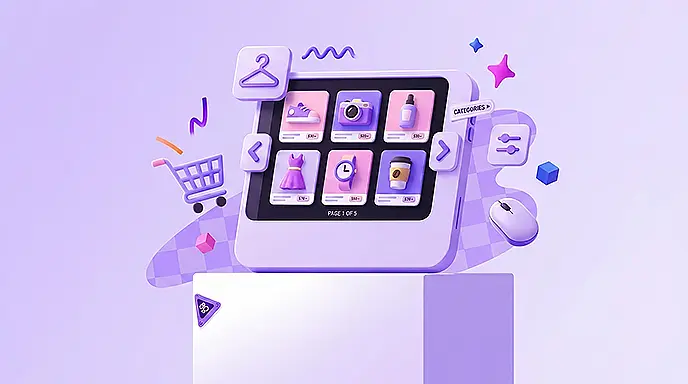
Sending heavy PDF attachments, scattered images, and outdated pricing sheets to B2B clients is the fastest way to destroy corporate credibility and kill a deal. In the modern economy of speed, an Interactive Digital Catalog is a ruthless competitive advantage. It is a premium, cloud-based presentation that opens instantly via a single link, guiding your prospects directly to the checkout or negotiation table with zero friction.
Unlike traditional printed catalogs that become obsolete the moment they leave the press, a digital catalog is a living, agile asset. Price updates, new product launches, or inventory removals happen in real-time on the exact same link. This means your marketing budget will never again be wasted on reprinting outdated collateral, and your sales team will always present the most accurate data.
To truly understand the massive Return on Investment (ROI) of a digital catalog, compare its functionality against traditional print or static PDFs:
| Strategic Feature | Legacy Print / Static PDF | Interactive Digital Catalog (Monstizo) |
|---|---|---|
| Distribution & Scaling Cost | Extremely High (Printing, postage, and physical shipping) | Zero (Unlimited global link sharing instantly) |
| Agility & Content Updates | Impossible (Requires trashing the entire print run) | Instant & Free (Real-time updates on the same URL) |
| User Friction & Drop-off | High (Requires downloading heavy files to a device) | Zero (Instant browser loading on any mobile device) |
| Lead Generation & Conversion | One-way communication with zero direct action | Embedded CTAs, WhatsApp chat, and direct cart links |
| Media Richness | Limited strictly to static text and flat images | Dynamic (Embedded 3D models, product videos, and GIFs) |
Your clients do not have the time or patience to download a 100MB PDF. A cloud-based catalog delivers a frictionless, buttery-smooth User Experience (UX) on any device in under a second, keeping the buyer engaged and focused.
Your catalog is no longer just a lookbook. By strategically embedding interactive buttons, we allow buyers to jump directly to a product page on your website or instantly message a sales representative on WhatsApp right from the catalog page.
You cannot demonstrate the precision of an industrial machine or the luxury of a complex product with a static photo. Interactive catalogs allow you to embed high-definition demo videos and 360-degree views directly into the layout.
Handing a client a minimalist, interactive, page-flipping digital experience cements your brand in the minds of B2B buyers, procurement managers, and board members as a modern, tech-forward industry leader.
Ordering a custom digital catalog at Monstizo is not about arranging pictures on a page; it is the architecture of a visual database engineered on UI/UX principles, corporate identity, and strict conversion strategies. If you are ready to elevate your product presentation to world-class standards, this format will become your sales team's most lethal weapon.
Explore digital catalog design projects created for presenting services, products, branding, and professional use on websites, social media, and presentation files.
Service rates for 2026
| Design | Delivery Format | Price Per Page |
|---|---|---|
| Economy | HTML | $3.90 |
| Custom | HTML | $8.30 |
| Plus + | HTML | $14 |
The era of expensive printed catalogs that expire within a month, and heavy PDF attachments that crash your client's email, is officially over. Today, interactive digital catalog design is a mandatory baseline for industry leaders. This format transforms your product presentation into a buttery-smooth, high-speed, and deeply persuasive experience that drives the prospect directly to the checkout cart or negotiation table—without requiring a single sales pitch.
Your catalog must be engineered based on your sales strategy and buyer behavior (B2B vs. B2C). At Monstizo, we architect catalogs across four distinct tiers:
The ultimate enterprise solution. Opens instantly in the browser without downloads. Packed with smart navigation, embedded demo videos, and direct contact buttons.
Driven by high-end imagery and aggressive negative space. Engineered for fashion, interior design, jewelry, and furniture brands that must communicate visual prestige.
Designed specifically for online shops and social media campaigns. Every product features a "Buy Now" button that routes the customer directly to your payment gateway.
Heavily compressed, vertically oriented layouts explicitly engineered for rapid, effortless reading on smartphone screens—eliminating the need for constant pinch-to-zoom.
Any business that needs to simplify the complexity of its services or showcase the vastness of its inventory needs this tool. Here is how features align by sector:
| Interactive Features | B2B & Manufacturing | E-Commerce (B2C) | Medical & Clinics | Real Estate & Architecture |
|---|---|---|---|---|
| Technical Spec Tables | ✓ | × | ✓ | ✓ |
| Direct "Buy Now" Buttons | × | ✓ | × | × |
| Embedded Product Video | ✓ | ✓ | ✓ | ✓ |
| WhatsApp & Location Links | ✓ | ✓ | ✓ | ✓ |
A successful digital catalog is not just a long poster. At Monstizo, we enforce strict User Experience (UX) laws to guarantee maximum conversion:
Relying on cheap templates or inexperienced designers usually results in files that actively repel your clients. Avoid these commercial disasters:
The cost of digital catalog design is calculated based on Page Count, UI Customization Level, and Interactive Features (embedded media, link networking, and web-hosting vs. PDF).
| Pricing Factor | Impact on Project Scope |
|---|---|
| Total Page Count | The primary driver. Projects exceeding 20 pages typically qualify for scaled volume pricing. |
| Graphic Design (UI) Level | The difference between utilizing clean standard layouts vs. 100% bespoke, concept-driven art direction. |
| Interactivity Complexity | Integration of smart buttons, jump-menus, embedded video, and custom loading animations. |
| Copywriting & Content | Are product descriptions finalized, or do you require Monstizo's team to draft commercial sales copy? |
To view our specific tier breakdowns—from economy PDF layouts to luxury interactive experiences—please review the digital catalog pricing section below.
Based on 8 client ratings
If you are looking for a professional way to present your services, build audience trust, and increase sales, contact us via WhatsApp or Telegram and place your Digital Catalog order. We are ready to offer the best solution based on your brand needs and budget.
Answers to common questions about digital catalog design, pricing, delivery time, and implementation process.
The cost of digital catalog design depends on several factors such as the number of pages, design style, number of required languages, level of custom graphics, and interactive features. For example, a simple PDF catalog differs in execution time and pricing from a smart catalog with links, videos, call buttons, and a web-based version. For an accurate estimate, you can review the pricing table on this page or send your project details for a custom quote.
The delivery time depends on the number of pages, amount of content, structure, level of graphic design, and required features. In most projects, the turnaround time is usually between 3 and 7 business days. For larger, multilingual, or highly interactive projects, the timeline may be longer and will be clearly communicated before the project starts.
Yes, all digital catalog design projects are created responsively or adapted for different devices so they display properly on mobile, tablet, and desktop screens. Since many users view catalogs on their phones, optimizing layout, readability, loading speed, and user experience for mobile is an essential part of the design process.

The latest content and practical tips on content creation and digital brand growth.